Why Hydration Matters


We tend to think about water only when we're already thirsty — reaching for a glass after a long walk, a hard workout, or a restless night. But hydration isn't a once-in-a-while fix. It's the quiet foundation underneath nearly everything your body does, every hour of every day. When you're well-hydrated, you simply feel more like yourself: clearer, steadier, more at ease.
At Selah Drip Co., hydration is at the heart of how we care for you. So let's slow down and look at why it matters so much — and where intravenous (IV) hydration can offer meaningful support. (Yes, you can keep your water bottle nearby while you read. I'll wait.)
Your body runs on water
Water makes up roughly 60% of the adult body, and nearly every cell, tissue, and organ depends on it to function properly. It's far more than a thirst-quencher. Water helps regulate your body temperature, carries oxygen and nutrients to your cells, cushions your joints, supports digestion, and helps your kidneys flush out waste.
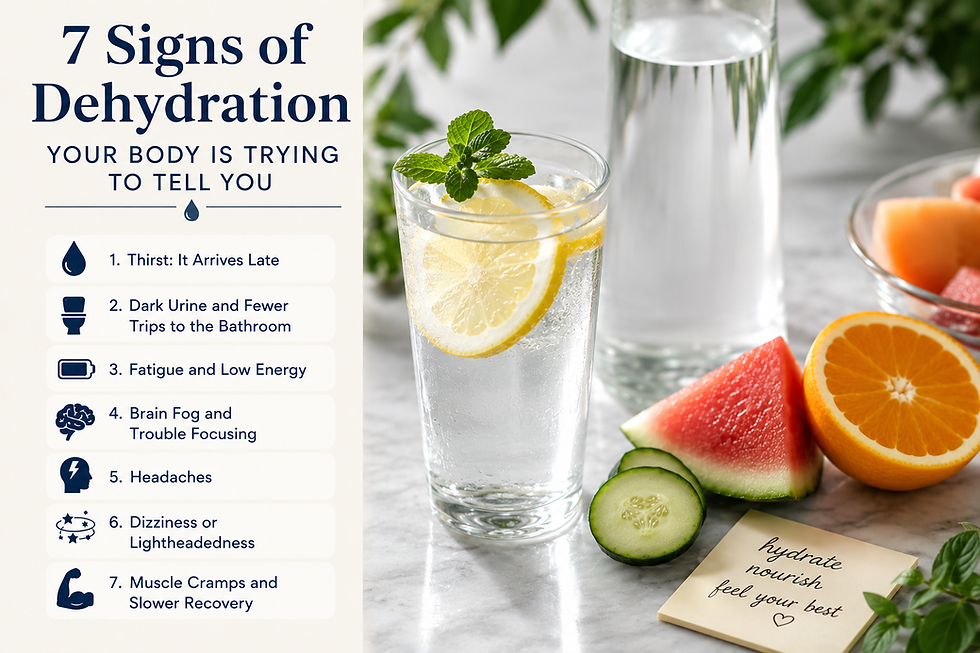
When those fluid levels dip, the effects show up quickly — and often subtly. Even mild dehydration, losing as little as 1–3% of your body weight in fluid, can affect your mood, memory, and concentration, and can bring on headaches and fatigue. In other words, that mid-afternoon slump or that nagging tension behind your eyes may simply be your body asking for water — not, in fact, a fourth cup of coffee.
How much do you actually need?
The U.S. National Academies of Sciences, Engineering, and Medicine suggests that adequate daily fluid intake is about 3.7 liters (roughly 15.5 cups) for men and about 2.7 liters (roughly 11.5 cups) for women — and that includes fluids from food as well as what you drink. Foods like cucumber, watermelon, and leafy greens are over 90% water and count toward your total. (So yes, summer fruit salad is technically hydration. You're welcome.)
Your individual needs shift with the seasons of life and the day: hot Florida weather, exercise, illness, travel, pregnancy, and breastfeeding all raise the amount your body requires. For most healthy people, thirst is a reliable guide and drinking water throughout the day is enough to stay well.
When water alone isn't enough
There are times, though, when ordinary sips can't keep up. Dehydration happens when your body loses more fluid than it takes in — common culprits include heat, intense exercise, fever, and the vomiting or diarrhea that come with illness. Mild to moderate dehydration can usually be corrected by drinking more fluids, ideally with electrolytes.
But the situation changes when your body is depleted faster than you can replace it by mouth, or when nausea makes drinking difficult. In these moments, fluids delivered directly into a vein are absorbed quickly and can speed recovery — which is why IV fluids have long been a trusted tool in clinical care.
A quick, important note: severe dehydration is a medical emergency. Signs like confusion, a racing heart, dizziness, fainting, or little to no urination need immediate medical attention, not a wellness visit. When in doubt, seek emergency care.
How IV hydration works
With IV hydration, sterile fluids and electrolytes are delivered straight into your bloodstream through a small catheter, bypassing the digestive system entirely. Because the fluid doesn't have to be absorbed through your gut first, it becomes available to your body right away — which is why many people feel refreshed before a session is even finished.
That same direct route is why IV hydration can be a thoughtful form of support after dehydrating circumstances: a demanding athletic effort, travel, a heat-heavy day outdoors, or recovering from an illness that left you depleted and struggling to keep fluids down.
An honest word about what IV hydration can — and can't — do
Because I'm a registered nurse, I believe in being clear-eyed and honest with you. IV hydration is a genuine tool, but it isn't magic, and it isn't a substitute for the basics of good health.
For most healthy adults, daily hydration needs are well met through drinking fluids and eating a balanced diet — no needle required. IV therapy is best understood as occasional, targeted support, not a replacement for rest, nourishing food, movement, and consistent water intake. And while the speed and absorption benefits of IV fluids are well established, the evidence behind some broader wellness claims is still limited and continues to be studied.
I'd rather you have realistic expectations and feel genuinely cared for than oversell what a drip can do. (I'm a nurse, not a magician — though I do think a good IV comes pretty close.) That's part of what thoughtful, personalized care means to me.
The Selah approach
At Selah Drip Co., we care for you within a medically supervised framework. That means I can take my time, pay close attention, and build each visit around what your body actually needs, instead of a one-size-fits-all pour.
The name Selah appears throughout the Hebrew Scriptures, often read as a pause — a breath between the verses. That's what I hope hydration can be for you: not one more task on the list, but a small, deliberate moment to slow down and tend to yourself.
Let's get you taken care of
Whether a long week has worn you thin or you simply want to feel steadier in your own skin, I'd love to take care of you. Being trusted with someone's rest is the part of this work I treasure most.
Sources
National Academies of Sciences, Engineering, and Medicine (Institute of Medicine), Dietary Reference Intakes for Water, Potassium, Sodium, Chloride, and Sulfate — daily total water recommendations. nationalacademies.org
Mayo Clinic — Water: How much should you drink every day? mayoclinic.org
Mayo Clinic — Dehydration: Symptoms, causes, diagnosis & treatment. mayoclinic.org
Cleveland Clinic — Dehydration: Symptoms & Causes. my.clevelandclinic.org
National Institutes of Health (NIH) — hydration and the body's vital processes.
Healthline — 7 Science-Based Health Benefits of Drinking Enough Water. healthline.com
This article is for general educational purposes and is not medical advice. If you are experiencing signs of severe dehydration or a medical emergency, seek immediate medical care.


Comments